


Online seminar – Future global health functions and the role of WHO
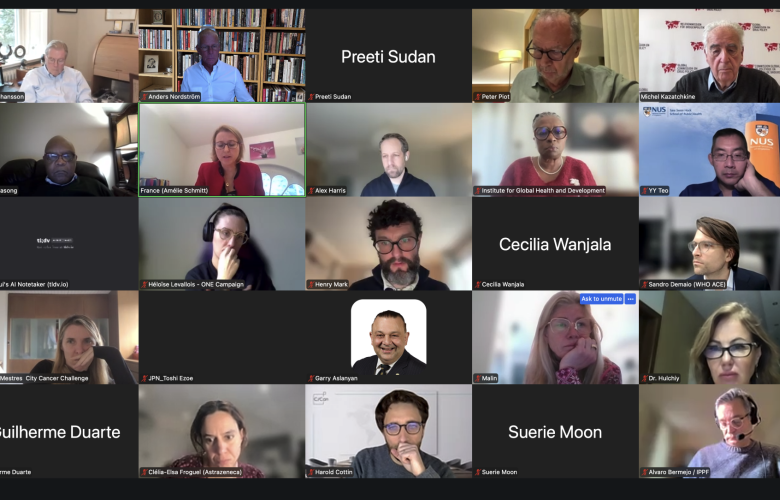
On 23rd January 2026, The Partnership for International Politics and Diplomacy for Health hosted an interactive seminar on future global functions for health and the role of World Health Organization (WHO). The meeting convened more than 70 former fellows, faculty members and institutional partners from the Partnership’s Executive Program.
Against the backdrop of an ongoing health financing crisis; persistent questioning of science and multilateralism; unprecedented momentum for reforming the international ecosystem for health; the US withdrawal from the WHO; and the upcoming WHO Executive Board meeting, these discussions carry practical, not just theoretical weight.
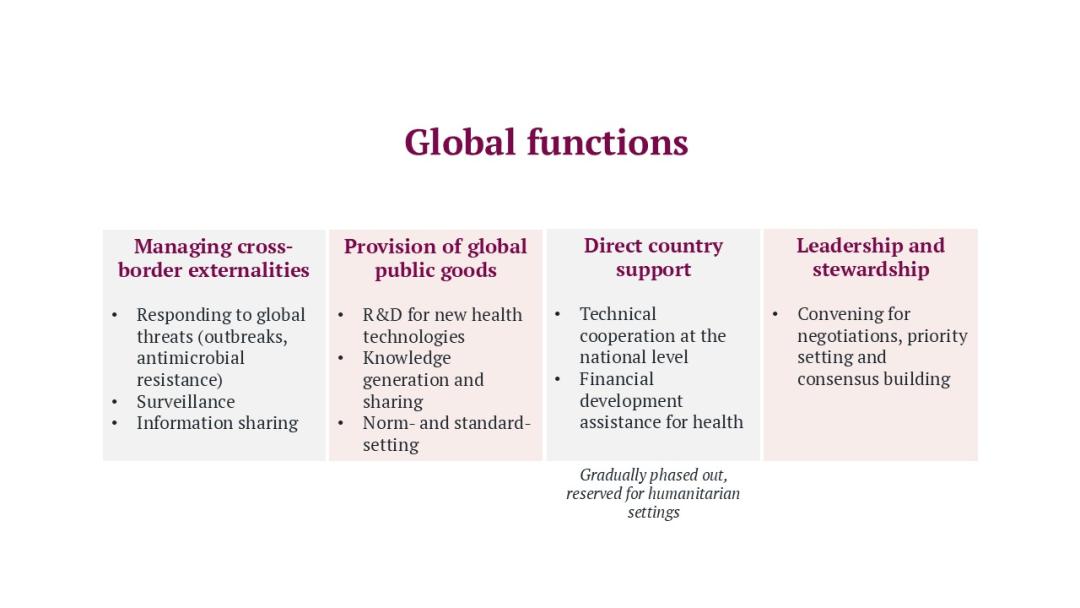
During the session, Anders Nordström provided a framing of global health functions and described key shifts in global health. Amélie Schmitt and Michel Kazatchkine followed this by outlining proposals for how WHO could adapt to and strengthen its position in the current landscape.
Sandro Demaio moderated an exchange of cross-regional perspectives on the desired role of WHO, with contributions from Satoshi Ezoe, Magda Robalo and Peter Piot, followed by an exchange with the participants.
During the seminar, there was broad agreement that WHO should refocus on its core mandate and thus prioritise its convening, normative and standard-setting roles. This was coupled with calls for greater transparency and accountability within the Organization. Participants largely agreed that WHO should narrow its technical work, ensure it does not take over responsibilities that lie with countries’ national authorities, and avoid duplication of fieldwork done by other UN agencies and humanitarian actors. While it was stressed that cost-containment and reform are not synonymous, participants argued that a sharper focus on WHO’s global comparative advantages would enable it to operate more effectively under a reduced budget.
It was recognised that WHO reforms cannot be discussed in isolation, and that they should be contextualised within the broader transformations of the UN system and global health ecosystem.
The seminar served as a timely initial dialogue signalling emerging agreement that WHO's work should be grounded in its core normative mandate, scientific expertise and convening power.
The conversation should be advanced by engaging public actors, private sector stakeholders, and civil society, recognising their distinct roles, responsibilities, and perspectives. Informal spaces can help prepare the ground for discussions in formal decision-making fora.
Additional reading
- Four paradigm shifts to shape an agenda for global health reforms (Nordström A, e Silva MR, Clark H, Minghui R, Piot P, Teo YY): https://www.thelancet.com/journals/lancet/article/PIIS0140-6736(25)02634-0/abstract?rss=yes
- Transforming the Global Health Ecosystem for a Healthier World in 2026 (Pate MA, Kaberuka D and Piot P): https://www.thinkglobalhealth.org/article/transforming-the-global-health-ecosystem-for-a-healthier-world-in-2026
- Global health leap: An urgent call for action (Nishtar S): https://www.thelancet.com/journals/lancet/article/PIIS0140-6736(25)02514-0/abstract?rss=yes
- Functions of a global health system in a new era (Rasanathan K, Cloete K, Gitahi G, Gómez-Dantés O, Saminarsih D, Swaminathan S, Takian A, Røttingen JA): https://www.nature.com/articles/s41591-025-03936-9
- Rethinking the Role of WHO in a Transformed Global Health Order (Kickbusch I, Kazatchkine M and Piot P): https://genevahealthfiles.substack.com/p/rethinking-role-of-world-health-organization-in-a-transformed-global-health-order-kickbusch-piot-kazatchkine